Looking at the night sky from your own home can be a surprisingly rewarding experience. The Moon, bright planets, star clusters, and many other celestial objects can become much more interesting when viewed through a telescope. You do not always need to travel to a remote location or be an experienced astronomer to begin exploring astronomy. With the right equipment and a little patience, stargazing can become an enjoyable hobby for beginners, families, students, and experienced enthusiasts alike.
However, choosing a telescope for home use can be confusing. Different telescopes use different optical designs, apertures, focal lengths, mounts, and accessories. A telescope that works well for observing the Moon may not necessarily be the most convenient option for someone interested in planets or deep sky objects.
If you are searching for the Best Telescopes for home stargazing and astronomy adventures, understanding these basic factors can help you select equipment that matches your interests and observing conditions.
Why Stargazing at Home Is Worth Exploring
One of the biggest advantages of astronomy is that you can start observing from surprisingly simple locations. A balcony, terrace, garden, or open area around your home can provide opportunities to explore the night sky.
The Moon is usually the easiest object to observe because it is bright and offers plenty of visible surface detail. Depending on the telescope and observing conditions, you can also explore bright planets and other astronomical objects.
Home stargazing is particularly useful for beginners because it allows you to learn gradually. You can become familiar with focusing, changing eyepieces, locating objects, and understanding how atmospheric conditions affect your observations.
It can also be an educational activity for children and students, helping them develop an interest in science and astronomy through direct observation.
Understanding Telescope Aperture
Aperture is one of the most important specifications to understand before buying a telescope. It refers to the diameter of the telescope’s primary lens or mirror.
A larger aperture allows the telescope to collect more light and can reveal more detail under suitable observing conditions. This is particularly useful when observing fainter astronomical objects.
However, a larger telescope can also be heavier, more expensive, and more demanding to set up. For home users, the best approach is to consider both optical capability and practical usability.
Rather than automatically selecting the telescope with the largest aperture, think about where you will store it, how often you will use it, and whether you can comfortably transport and set it up.
Telescope Types Explained
There are several telescope designs available, but beginners commonly encounter refractor and reflector telescopes.
Refractor Telescopes
Refractors use lenses to collect and focus light. They are generally straightforward to operate and can be convenient for beginners who want a simple setup.
They can be particularly enjoyable for observing the Moon, planets, and brighter celestial targets.
Reflector Telescopes
Reflectors use mirrors rather than a primary objective lens. Newtonian reflectors are a popular type and can offer a relatively large aperture for their price.
They can be useful for observers who want to explore a broader range of astronomical objects and are comfortable learning a little more about telescope setup and maintenance.
Understanding the basic differences between telescope designs can make comparing the Best Telescopes much easier.
Choosing the Right Mount
A telescope’s optical tube gets most of the attention, but the mount is equally important. A good optical system can still be frustrating to use if the mount is unstable or difficult to control.
Altazimuth mounts are often straightforward for beginners. They allow movement up, down, left, and right and can be convenient for casual home observation.
Equatorial mounts work differently and are designed to make it easier to track celestial objects as they appear to move across the sky. They can be useful for enthusiasts who want more control over longer observing sessions and eventually want to explore astrophotography.
For a beginner, ease of use should be a major consideration when selecting the Best Telescopes for home astronomy.
Focal Length and Magnification
Another specification that frequently attracts attention is magnification. While magnification is important, it should not be the only factor used to judge a telescope.
Magnification depends on the telescope’s focal length and the eyepiece being used. A telescope with interchangeable eyepieces can therefore provide different levels of magnification.
Very high magnification is not always beneficial. If atmospheric conditions are poor or the telescope has limited optical resolution, increasing magnification can result in a larger but less useful image.
For beginners, a combination of appropriate aperture, good optics, stable mounting, and useful eyepieces is generally more important than chasing the highest possible magnification.
Deep Sky Objects
Under darker skies, suitable telescopes can help observers explore objects such as nebulae and galaxies. Their appearance can vary significantly depending on aperture, sky darkness, atmospheric conditions, and viewing experience.
This is why expectations should remain realistic when choosing among the Best Telescopes. Images seen in professional astronomy photographs are often captured using specialised equipment, long exposures, image processing, or large observatories.
Light Pollution and Home Stargazing
Your location has a significant effect on what you can see. Urban areas produce light pollution, which can make faint stars and deep sky objects difficult to observe.
However, light pollution does not mean that home astronomy is impossible. The Moon and brighter planets remain excellent targets from many urban locations.
If possible, choosing a darker area away from direct artificial lighting can improve your observing experience. Even moving from a brightly lit terrace to a darker garden or nearby open area may make a noticeable difference.
Vanrakshak Best Telescopes for Astronomy Enthusiasts
For customers looking for astronomy equipment for home observation, Vanrakshak offers telescope options designed for different levels of interest.
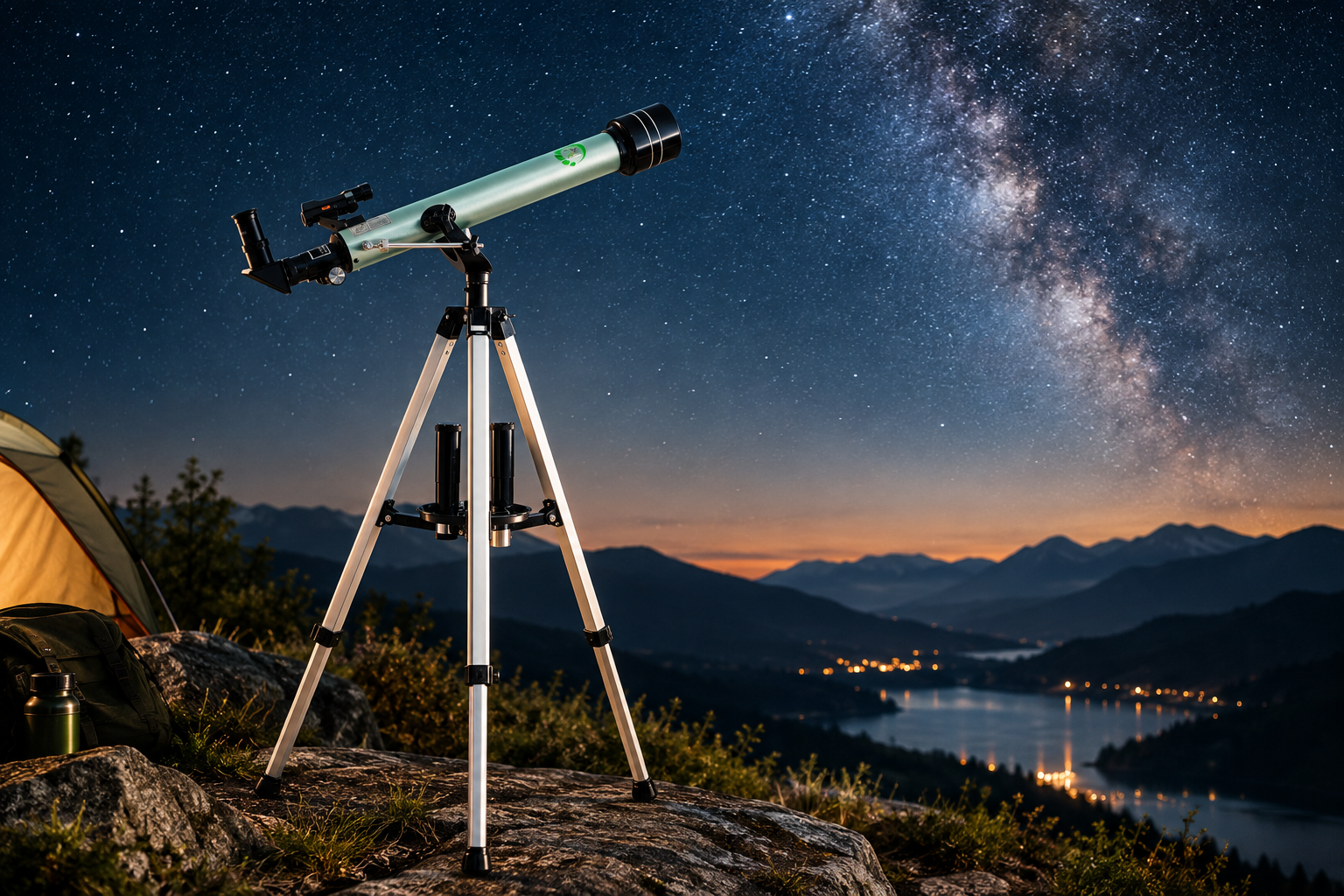
The Vanrakshak Galaxy 60AZ, for example, features a 60mm optical system with a 700mm focal length and an altazimuth mount. It includes multiple eyepieces, a 3x Barlow lens, a 90-degree star diagonal, and a red dot finderscope. Its straightforward configuration can make it suitable for users who want to begin exploring the night sky from home.
For enthusiasts looking for a larger optical setup, the Vanrakshak Nexus 150EQ is a 150mm Newtonian reflector with a 750mm focal length and an equatorial mount. A larger aperture can provide greater light-gathering capability, although the setup also requires more space and familiarity with telescope operation.
When comparing the Best Telescopes, it is important to match the telescope with your experience level, observing goals, available space, and budget rather than choosing based only on specifications.These questions can help you narrow down the Best Telescopes for your individual astronomy journey.
Frequently Asked Questions
1. What are the Best Telescopes for beginners?
For beginners, a telescope with a stable mount, straightforward controls, suitable aperture, and useful accessories can be a practical choice. The ideal model depends on whether you mainly want to observe the Moon, planets, or deeper sky objects.
2. Can I use a telescope from my home?
Yes. Best Telescopes can be used from suitable open areas such as terraces, balconies, gardens, or other locations with a clear view of the sky. Reducing nearby artificial light can improve visibility.
3. What can beginners see with a telescope?
Beginners can start with the Moon and bright planets. Depending on the telescope, location, and sky conditions, they can also observe star clusters and selected deep sky objects.
4. Is a larger aperture always better?
A larger aperture generally provides greater light-gathering capability, but it also tends to increase the telescope’s size, weight, and cost. The right aperture depends on your observing goals and practical requirements.
5. Where can I buy telescopes in India?
You can purchase best telescopes directly from A&S Creations. The store offers astronomy equipment, including telescope options suitable for beginners and more experienced stargazers.
Final Thoughts
Home stargazing is an accessible way to begin exploring astronomy. You do not need to be a professional astronomer to enjoy the night sky. With the right telescope, a suitable observing location, and realistic expectations, even simple observations can become memorable experiences.
When choosing the Best Telescopes, focus on aperture, optical design, mount stability, focal length, accessories, portability, and your intended targets. A telescope that matches your needs and is easy to use will generally provide more value than one chosen solely for its highest specification.
Vanrakshak offers telescope options for different astronomy requirements, while A&S Creations provides customers with the option to purchase telescopes directly from its store. With the right equipment, your home can become the starting point for a rewarding journey through the night sky.