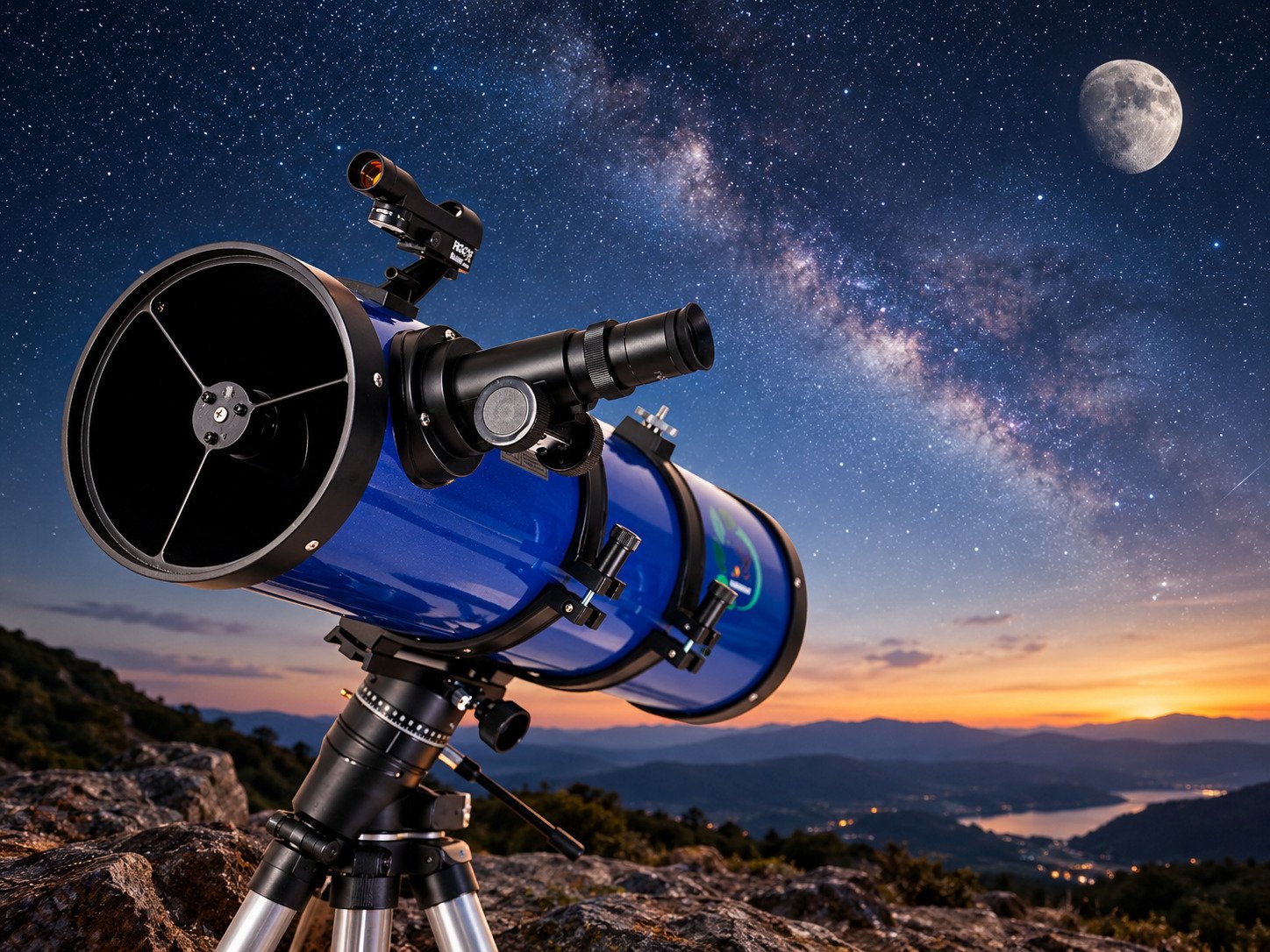
There is something deeply fascinating about looking up at the night sky and realizing that the Moon, planets, stars, and distant celestial objects are much more than tiny points of light. With the right Astronomical telescopes, ordinary stargazing can become a rewarding experience that encourages curiosity, observation, and a deeper interest in astronomy.
For beginners, students, families, and experienced astronomy enthusiasts, choosing the right telescope can make a significant difference. However, the large number of models and specifications available online can make the buying process confusing. Aperture, focal length, optical design, mount type, magnification, eyepieces, and optical coatings all influence the overall viewing experience.
If you are planning to purchase Astronomical Telescopes for your next stargazing adventure, understanding these features can help you choose equipment that matches your interests and experience level.
What Are Astronomical Telescopes?
Astronomical telescopes are optical instruments designed to collect and magnify light from distant celestial objects. Unlike ordinary viewing equipment, they are specifically developed to help observers study objects in the night sky.
Depending on the telescope and viewing conditions, you may be able to observe:
- The Moon and its craters
- Jupiter and some of its moons
- Saturn and its rings
- Bright planets
- Star clusters
- Nebulae
- Bright galaxies
- Distant stars and other celestial objects
The quality of the observation depends not only on the telescope but also on atmospheric conditions, light pollution, observing location, and the experience of the user.
Why Choosing the Right Telescope Matters
Not every telescope is designed for the same purpose. A beginner looking for an easy introduction to astronomy may have different requirements from an experienced observer interested in deeper sky observation.
The right telescope should offer a practical balance of:
- Aperture
- Optical quality
- Focal length
- Mount stability
- Ease of setup
- Portability
- Available accessories
- Intended observing targets
Instead of choosing a telescope based only on its advertised magnification, it is better to understand how the complete optical system works.
Understanding Focal Length
Focal length is another important specification when comparing Astronomical Telescopes.
It influences the telescope’s field of view and the magnification produced with a particular eyepiece.
A longer focal length can be useful for observing the Moon and planets because it can provide higher magnification with commonly available eyepieces. Shorter focal lengths can provide wider views that may be useful for larger star clusters and other expansive targets.
The important point is that focal length should be evaluated together with aperture and eyepiece selection rather than considered in isolation.
Don’t Choose a Telescope Only for High Magnification
One of the most common mistakes beginners make is assuming that a telescope with the highest magnification will automatically provide the best views.
That is not how astronomical observation works.
Very high magnification can make an image appear larger while simultaneously making it dimmer, less stable, or less detailed if the telescope’s optical system and atmospheric conditions cannot support it.
Good optics, appropriate aperture, a stable mount, and suitable observing conditions are often more important than simply increasing magnification.
This is why experienced astronomy enthusiasts look at the complete specification before choosing between different Astronomical Telescopes.
Consider Your Stargazing Location
Where you use your telescope can have a major effect on what you see.
Urban areas often have significant light pollution, which can make faint celestial objects difficult to observe. Darker locations away from city lights can reveal considerably more stars and improve deep-sky observation.
Before buying Astronomical Telescopes, think about where you will actually use them.
If you mainly observe from a balcony or urban home, portability and easy setup may be particularly important. If you regularly travel to darker locations, a telescope that can be transported conveniently may provide greater value.
Choosing a Telescope for Beginners
Beginners should generally prioritize ease of use and balanced specifications.
A good beginner telescope should have:
- Clear and reliable optics
- A stable mount
- Straightforward focusing
- Practical accessories
- Reasonable portability
- Easy setup
A telescope that is simple to operate encourages regular use. This is particularly important for students and families introducing children to astronomy.
Rather than purchasing the most complicated equipment immediately, beginners can start with a model that allows them to learn the basics of locating, focusing, and observing celestial objects.
Choosing a Telescope for Experienced Stargazers
Experienced users may have more specific requirements.
Depending on their interests, they may prioritize larger apertures, equatorial mounts, longer focal lengths, better tracking capabilities, or compatibility with additional astronomy accessories.
Someone interested primarily in planetary observation may have different priorities from an observer interested in star clusters and brighter deep-sky objects.
This is why choosing Astronomical Telescopes based on your actual observing goals is more useful than following a generic “best telescope” list.
Vanrakshak Telescopes for Astronomy Enthusiasts
For users looking for practical astronomy equipment, Vanrakshak offers telescope models designed for different levels of stargazing.
The Vanrakshak Galaxy 60AZ is a practical example for users looking for a relatively straightforward telescope setup. Its 60 mm aperture, 700 mm focal length, fully multi-coated optics, altazimuth mount, slow-motion controls, eyepieces, Barlow lens and red dot finderscope provide a useful combination for beginners and casual astronomy enthusiasts.
For users seeking a larger aperture and a more advanced setup, the Vanrakshak Nexus 150EQ offers a 150 mm Newtonian reflector design with a 750 mm focal length and an equatorial mount. This type of configuration can appeal to enthusiasts looking for greater light-gathering capability and more control over astronomical observation.
The important takeaway is that the right telescope depends on your specific requirements. You do not necessarily need the largest or most expensive model to begin enjoying astronomy.
Buy Astronomical Telescopes from A&S Creations
If you are ready to purchase a telescope, you can also buy directly from our A&S Creations store. A&S Creations offers Vanrakshak Astronomical telescopes and other outdoor and observation equipment, allowing customers to explore models according to their astronomy requirements.
Before placing your order, compare aperture, focal length, mount type, optical design, included accessories, and intended usage. This will help you choose a telescope that you are more likely to use regularly and enjoy for years.
FAQs
1. What are Astronomical Telescopes used for?
Astronomical Telescopes are designed to observe distant celestial objects such as the Moon, planets, stars, star clusters, nebulae, and some galaxies.
2. What is a good telescope for beginners?
A beginner should generally look for a telescope with good optics, a stable mount, simple controls, practical accessories, and an aperture appropriate for their intended observation.
3. Is a larger aperture always better?
A larger aperture can collect more light and reveal greater detail, but it can also increase size, weight, and cost. The ideal aperture depends on your observing goals and how you plan to use the telescope.
4. Can I see planets with a beginner telescope?
Yes. A suitable beginner telescope can provide impressive views of the Moon and several planets. The amount of visible detail depends on aperture, optical quality, atmospheric conditions, and observing location.
5. Where can I buy astronomical telescopes in India?
You can purchase Vanrakshak Astronomical telescopes directly from A&S Creations, with models available for different levels of astronomy and stargazing requirements.
Final Thoughts
Choosing the right telescope is the beginning of a much larger journey into astronomy. Whether you want to observe lunar craters, follow the planets, explore star clusters, or simply spend quiet evenings under the night sky, the right equipment can make the experience far more rewarding.
When comparing Astronomical Telescopes, focus on the complete system rather than one impressive specification. Consider aperture, focal length, optical design, mount stability, portability, accessories, and your actual observing goals.
Vanrakshak provides telescope options for beginners as well as enthusiasts who want to explore astronomy more seriously. And when you are ready to purchase, you can conveniently buy your telescope directly from A&S Creations.
With the right telescope, every clear night can become an opportunity to discover something new.
Recent Posts
- Compare Binoculars Price and Shop Quality Optics Online
- Shop High Quality Binoculars for Every Outdoor Adventure
- Shop Astronomical Telescopes for Your Next Stargazing Adventure
- Choose Binoculars for Bird Watching and Explore Every Detail
- Best Binoculars for Beginners to Upgrade Your Outdoor Experience
Recent Comments
Post Widget

Before Buying the Best Telescopes in India, Know These Tips


Shop Astronomical Telescopes for Beginners & Stargazers