Whether you are watching birds in a forest, observing wildlife during a safari, exploring mountain trails, or enjoying scenic views while travelling, the right binoculars can make every experience more rewarding. They help you see distant subjects more clearly, notice details that are easy to miss with the naked eye, and enjoy nature without disturbing the surroundings. In this guide, we will explore the important features to consider, explain how different specifications affect performance, and help you choose High Quality Binoculars for wildlife watching, birding, and travel.
However, choosing the right binoculars requires more than simply looking at magnification or lens size. Optical quality, field of view, comfort, durability, and intended use all play an important role. The best choice depends on where you plan to use them and what you expect from your viewing experience.
Why Are Binoculars Important for Outdoor Activities?
Binoculars allow you to observe distant objects while maintaining a comfortable viewing position. They are particularly useful when approaching an animal or bird could disturb its natural behaviour.
For wildlife enthusiasts, binoculars make it easier to identify animals, observe their movements, and appreciate details such as feather patterns or body markings. Birdwatchers can use them to recognise species, study feeding habits, and observe birds sitting high in trees.
Travellers and adventure enthusiasts can also benefit from carrying binoculars. Whether you are exploring a national park, watching landscapes from a viewpoint, or enjoying a safari, they bring distant scenery closer without requiring you to move towards it.
A suitable pair of High Quality Binoculars can improve these experiences by providing a clear, comfortable, and consistent view.
Important Features to Consider Before Buying Binoculars
Understanding binocular specifications can help you make a more informed purchase. Here are the major factors worth checking before selecting a model.
1. Magnification and Objective Lens Size
Magnification indicates how many times closer an object appears compared with viewing it with the naked eye. For example, 8x magnification makes an object appear eight times closer.
The objective lens is the larger lens at the front of the high quality binoculars. Its diameter, measured in millimetres, influences how much light enters the optical system.
Some commonly used configurations include:
-
8×42: A balanced option for birdwatching, wildlife observation, and general outdoor use.
-
10×42: Offers greater magnification for observing distant subjects.
-
10×50: Larger objective lenses can be useful when more light gathering is desired.
-
12×50: Suitable for users who want higher magnification, although keeping the image steady can be more challenging.
For general wildlife watching and birding, 8×42 and 10×42 binoculars are popular choices. The right configuration depends on your viewing distance, lighting conditions, and ability to hold the binoculars steadily.
2. Optical Coatings and Image Clarity
Optical coatings help improve light transmission and reduce unwanted reflections inside the binoculars. They can contribute to better contrast, brightness, and image quality.
You may come across terms such as coated, fully coated, multi-coated, and fully multi-coated (FMC) optics.
Fully multi-coated optics have multiple coating layers on relevant air-to-glass surfaces. This can help improve light transmission and support a clearer viewing experience.
When comparing High Quality Binoculars, pay attention to the coating information rather than relying only on magnification. Good optical coatings can make a noticeable difference in how comfortably you observe your surroundings.
3. Field of View
Field of view refers to the width of the area visible through binoculars at a particular distance. It is commonly expressed in metres at 1,000 metres.
A wider field of view can make it easier to locate moving birds and follow animals as they move through their surroundings. This is particularly useful in forests, grasslands, and other environments where subjects may appear and disappear quickly.
Higher magnification often results in a narrower field of view, although the exact performance depends on the optical design.
If birdwatching is your primary activity, consider comparing the field-of-view specifications of different models before purchasing.
4. Prism Type
Binoculars commonly use roof prisms or Porro prisms. Both designs have their own advantages.
Roof prism binoculars generally feature a straight, compact body, making them convenient to carry during travel and outdoor activities.
Porro prism binoculars usually have a wider body design and can offer good optical performance. Their size and shape may be less convenient for some users.
The prism material and optical coatings also matter. BAK4 and BK7 are two commonly used prism glass types. However, overall image quality depends on the complete optical system, not just the prism material.
5. Eye Relief and Viewing Comfort
Eye relief is the distance between the eyepiece and the position where your eye can see the complete image.
This specification is particularly important for people who wear spectacles. Longer eye relief can make it easier to view the entire field without removing glasses.
Other comfort-related factors include:
-
Adjustable eyecups
-
Comfortable grip
-
Balanced weight distribution
-
Easy focus adjustment
-
Suitable interpupillary distance
For extended wildlife observation, comfortable High Quality Binoculars can make a significant difference.
Choosing the Right Binoculars for Different Activities
Not every outdoor activity requires the same optical configuration. Your intended use should guide your buying decision.
Binoculars for Wildlife Watching
Wildlife observation often involves watching animals from a safe distance. You may need to observe movement in forests, grasslands, wetlands, or mountainous regions.
An 8×42 or 10×42 configuration can be a practical choice for many wildlife enthusiasts. Consider waterproof construction, comfortable handling, and reliable focusing when comparing models.
For forest observation, a wider field of view can also help you locate animals more easily.
Binoculars for Birdwatching
Birdwatching requires patience and the ability to identify small details. Birds can move quickly, change direction, or remain partially hidden behind branches.
An 8×42 configuration is popular among birdwatchers because it offers a useful balance of magnification, brightness, and field of view. A 10×42 model may be preferable when observing birds from greater distances.
When selecting High Quality Binoculars for birding, consider image sharpness, focusing performance, field of view, and weight. These features can make long birdwatching sessions more comfortable.
Binoculars for Travel and Trekking
Travellers generally prefer equipment that is easy to carry and simple to use. A bulky pair of binoculars may become inconvenient during long walks or multi-day trips.
Compact high quality binoculars can be suitable for casual sightseeing, while 8×32 and 8×42 models can provide a useful balance between portability and viewing performance.
If you frequently travel through different weather conditions, look for durable construction and suitable water resistance.
Why Waterproof and Fogproof Construction Matters
Outdoor conditions can change unexpectedly. You may encounter rain, humidity, dust, or temperature differences while travelling or observing wildlife.
Waterproof construction helps protect binoculars against water entering the optical body, while fog proof construction helps prevent internal fogging caused by moisture.
Some binoculars use nitrogen filling or another dry-gas system to reduce internal condensation. These features can be valuable for people who regularly use their equipment outdoors.
However, always check the manufacturer’s stated protection level and care instructions. Waterproof does not automatically mean that a product is suitable for every type of water exposure.
Explore Vanrakshak Binoculars at A&S Creations
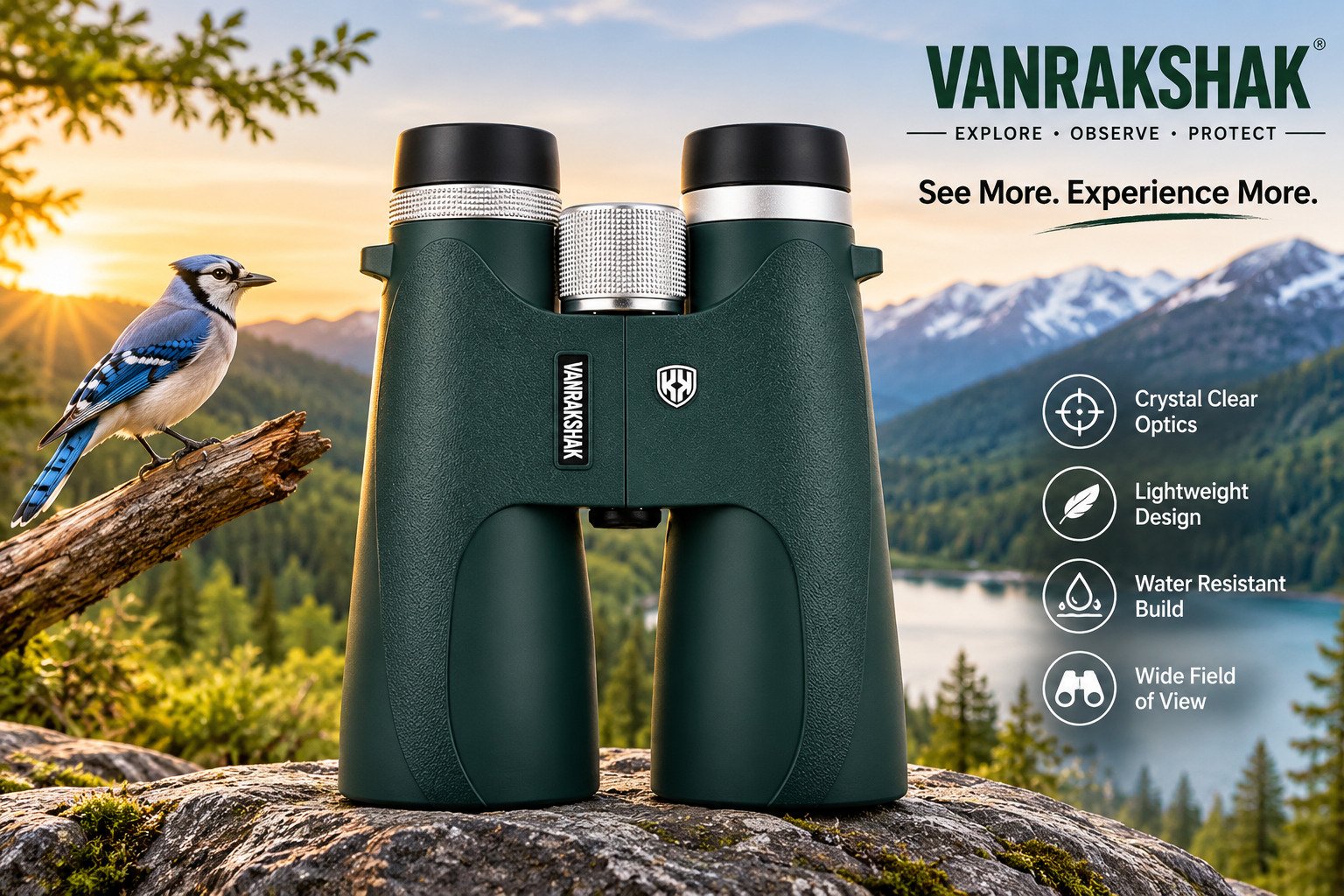
Finding suitable outdoor equipment becomes easier when you understand your requirements and compare products carefully. Vanrakshak offers binocular options designed for outdoor enthusiasts, wildlife observers, birdwatchers, and adventure lovers.
Its range includes models such as CHAKOR and TEJAS, offering different configurations for users with different viewing requirements. For example, the CHAKOR 10×42 is designed for users who want 10x magnification with a 42mm objective lens, while TEJAS 8×42 offers a lower-magnification configuration suited to general outdoor observation.
Before selecting a model, compare its optical specifications, field of view, weight, focusing distance, and construction to make sure it matches your needs.
You can explore the available Vanrakshak range at Vanrakshak and purchase your preferred binoculars directly from the A&S Creations online store at ascreations. Comparing the available models will help you choose equipment suited to your wildlife watching, birding, and travel requirements.
Final Thoughts
The right High Quality Binoculars can transform the way you experience nature. From identifying birds and observing wildlife to enjoying distant landscapes while travelling, they help you notice details that might otherwise go unseen.
Before buying, consider magnification, objective lens size, optical coatings, field of view, prism type, eye relief, weight, and weather protection. Instead of choosing a model simply because it offers higher magnification, look for a balanced combination of features that supports your intended activities.
Investing in High Quality Binoculars is ultimately about choosing reliable equipment that makes outdoor observation clearer, more comfortable, and more enjoyable.
FAQs
1. Which binoculars are best for wildlife watching?
8×42 and 10×42 binoculars are popular choices for wildlife watching. They offer a practical balance of magnification, handling, and viewing performance. Your choice should depend on viewing distance and outdoor conditions.
2. Are 8×42 binoculars good for birdwatching?
Yes. 8×42 binoculars are widely used for birdwatching because they offer a useful balance of magnification, field of view, and light gathering. They are suitable for observing birds in forests, wetlands, and open areas.
3. What is the difference between 8×42 and 10×42 binoculars?
Both have 42mm objective lenses, but their magnification differs. 8×42 binoculars provide 8x magnification and generally offer a wider field of view, while 10×42 High Quality Binoculars binoculars provide greater magnification for distant subjects.
4. Are waterproof binoculars necessary for outdoor use?
Waterproof binoculars are useful for outdoor activities because they offer additional protection against rain and moisture. They can be particularly beneficial during wildlife observation, trekking, and travel in unpredictable weather.
5. Where can I buy high quality binoculars online in India?
You can explore different binocular models from Vanrakshak and purchase them directly through the A&S Creations online store at ascreations. Compare magnification, lens size, optical coatings and other specifications before choosing a model.