Looking at the night sky can be an unforgettable experience. The Moon’s craters, Jupiter’s bright appearance, Saturn’s iconic rings, and countless stars have fascinated people for generations. While these objects may look like tiny points of light to the naked eye, a telescope can reveal details that make astronomy even more exciting. If you are searching for the Best Telescope to See Planets, understanding aperture, focal length, optical quality, and mount stability will help you make a better buying decision. This guide explains what to look for before purchasing a telescope and how to choose one according to your astronomy interests.
Whether you are a beginner, a student, a space enthusiast, or someone looking to develop a new hobby, choosing the right telescope is the first step towards exploring the universe. However, with so many telescope models, optical designs, and magnification options available, finding the right one can be confusing.
Why Do You Need a Telescope to Observe Planets?
Planets are visible from Earth, but most appear as bright points of light without optical equipment. A telescope collects and focuses light, allowing you to observe them with greater detail.
Depending on the telescope, atmospheric conditions, and viewing location, you may be able to observe:
-
Jupiter: Its four largest moons and, with suitable equipment and conditions, some cloud-band details.
-
Saturn: Its famous rings, which are among the most exciting sights for beginners.
-
Mars: Its small disc and, during favourable oppositions, some surface features.
-
Venus: Its changing phases, similar to the phases of the Moon.
-
The Moon: Craters, mountain ranges, valleys, and other surface details.
A telescope can also help you explore star clusters, bright nebulae, and other celestial objects beyond our solar system.
What Makes the Best Telescope to See Planets?
Not every telescope is designed for the same purpose. Some are better suited to observing the Moon and planets, while others provide a wider field of view for deep-sky observation.
Before choosing a model, consider these important specifications.
1. Aperture and Light Gathering Ability
Aperture refers to the diameter of the telescope’s main lens or mirror. It is one of the most important factors when evaluating telescope performance.
A larger aperture generally collects more light and can reveal finer planetary details when atmospheric conditions are favourable. It also improves the telescope’s ability to observe comparatively faint celestial objects.
For beginners, a smaller aperture telescope can be a practical starting point for observing the Moon and brighter planets. Enthusiasts looking for more detailed observations may prefer a larger aperture.
When comparing the Best Telescope to See Planets, consider aperture before getting distracted by advertised magnification numbers.
2. Focal Length and Magnification
Focal length influences the telescope’s magnification when used with a particular eyepiece. A longer focal length can provide higher magnification with the same eyepiece compared with a shorter focal length.
Magnification is calculated by dividing the telescope’s focal length by the eyepiece’s focal length.
For example, a best telescope to see planets with a 750mm focal length used with a 10mm eyepiece provides 75x magnification.
However, higher magnification does not always produce better images. Excessive magnification can make the image dimmer and less detailed. Atmospheric turbulence can also reduce the amount of useful magnification available on a particular night.
Good optics, appropriate magnification, and stable viewing conditions are more important than chasing the highest advertised number.
Tips for Getting Clearer Planetary Views
Even the Best Telescope to See Planets cannot guarantee perfect images every night. Atmospheric conditions, light pollution, and telescope setup all influence the final viewing experience.
Follow these practical tips to improve your observations:
-
Choose a clear night: Avoid observing when clouds or atmospheric turbulence significantly affect visibility.
- Allow the telescope to adjust: Give the instrument time to reach the outdoor temperature before detailed observations.
Choosing a Telescope for Beginners and Advanced Stargazers
Your experience level and observation goals should influence your purchase.
For beginners: Choose a best telescope to see planets with straightforward controls, a stable mount, and suitable accessories. A manageable setup makes it easier to develop an interest in astronomy.
For students: A beginner-friendly telescope can support educational activities and introduce concepts such as planetary motion, lunar phases, and constellations.
For planetary observation: Consider aperture, focal length, optical quality, and mount stability. These specifications are important for observing planetary details.
For experienced enthusiasts: Larger apertures, advanced mounts, and additional accessories may offer more flexibility for detailed observation and astrophotography.
The right telescope should match your current skills while allowing room to explore more advanced astronomy over time.
Explore Vanrakshak Telescopes for Your Astronomy Journey
For customers exploring best telescope to see planets options, Vanrakshak offers models designed for different levels of sky observation.
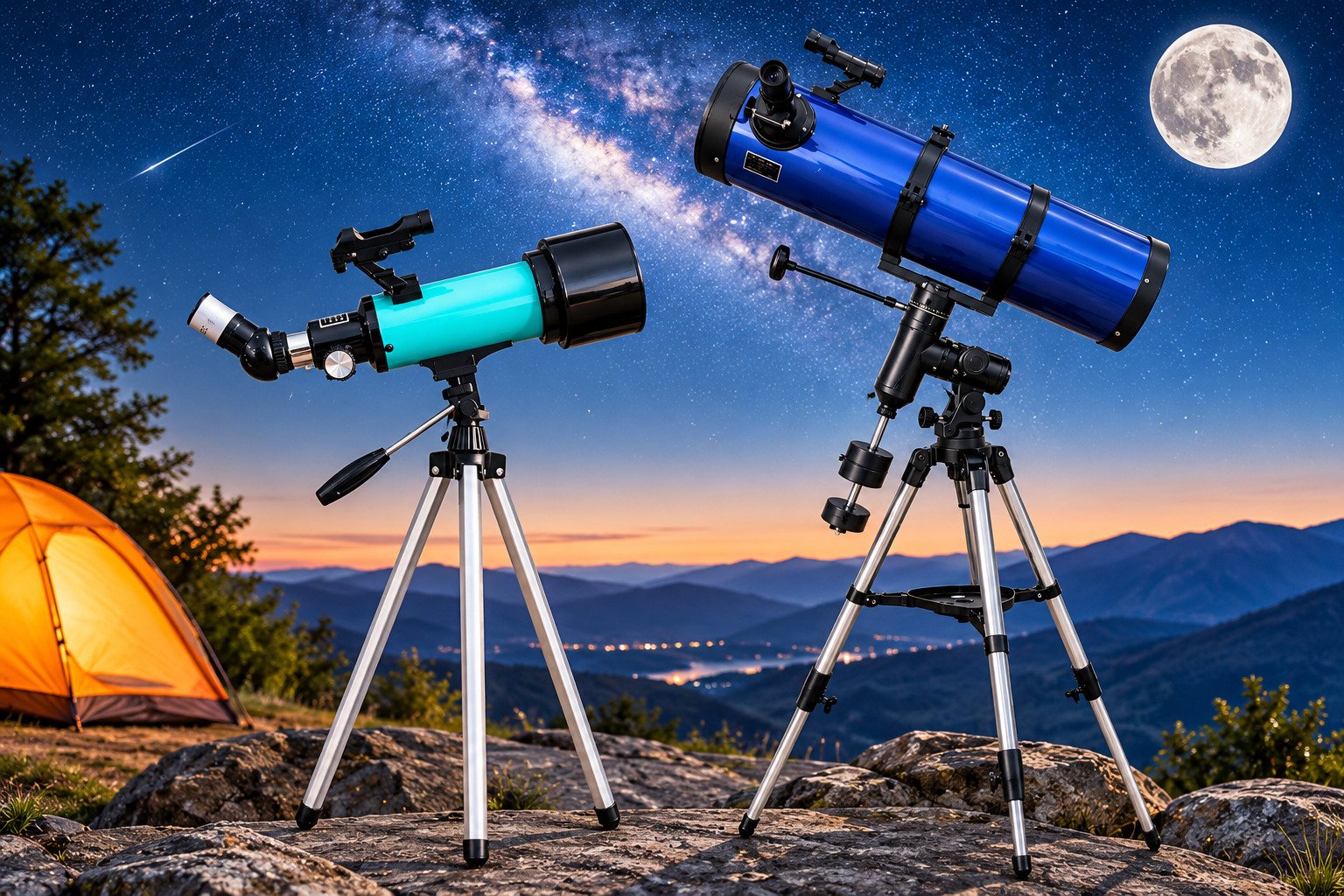
The Vanrakshak Galaxy 60AZ is a beginner-oriented telescope featuring a 60mm aperture and 700mm focal length. It comes with an altazimuth mount, 6mm, 10mm, and 25mm eyepieces, a 3x Barlow lens, a 90-degree star diagonal, and a red-dot finderscope.
It can be a starting point for observing the Moon and learning basic telescope operation.
For enthusiasts interested in a larger reflector, the Vanrakshak Nexus 150EQ features a 150mm Newtonian reflector with a 750mm focal length and an equatorial mount. Its larger aperture offers greater light-gathering potential for exploring celestial objects.
When comparing the Best Telescope to See Planets, consider these models according to your experience, budget, observing conditions, and preferred targets. Always review the complete product specifications before purchasing.
Where Can You Buy a Telescope Online in India?
Finding the best telescope to see planets is only one part of the buying process. Choosing a reliable seller is equally important.
Before placing an order, check the telescope’s specifications, included accessories, warranty information, and available customer support. This helps you understand what you are purchasing and whether the model suits your requirements.
You can explore different telescope options and purchase directly from A&S Creations. As an ecommerce store offering optical and outdoor equipment, A&S Creations provides customers with an opportunity to compare suitable products and select equipment for their astronomy interests.
Whether you are purchasing your first telescope or upgrading your existing equipment, compare the features carefully before making a decision.
FAQs
1. What is the Best Telescope to See Planets for beginners?
A beginner should look for a telescope with good optical quality, suitable aperture, a stable mount, and easy controls. A refractor or reflector can work well depending on the budget and observation requirements.
2. Can I see Saturn’s rings with a beginner telescope?
Yes. A suitable beginner telescope can reveal Saturn’s rings when the planet is visible and observing conditions are favourable. The amount of detail depends on aperture, optical quality, magnification, and atmospheric stability.
3. What telescope magnification is needed to see Jupiter?
Jupiter can be observed at relatively low magnification, but approximately 50x to 150x can be useful for examining its appearance and some details under suitable conditions. The best magnification depends on the telescope and atmospheric conditions.
4. Is a reflector or refractor better for viewing planets?
Both can provide good planetary views. Refractors are generally easy to maintain, while reflectors can offer larger apertures at competitive prices. Optical quality, collimation, and mount stability also influence performance.
5. Where can I buy a telescope in India?
You can explore telescope options online through reliable optical equipment retailers. A&S Creations offers telescopes that customers can compare and purchase directly according to their astronomy requirements.
Final Thoughts
Exploring planets through a telescope can turn your curiosity about space into a rewarding hobby. From observing lunar craters to discovering Jupiter’s moons and Saturn’s rings, the right equipment can make every clear night an opportunity to learn something new.
When choosing the Best Telescope to See Planets, focus on aperture, focal length, optical quality, mount stability, and ease of operation rather than maximum magnification alone.
Vanrakshak offers telescope options such as the Galaxy 60AZ and Nexus 150EQ for different observation requirements. Explore the available models, compare their specifications, and purchase directly from A&S Creations to begin your journey into astronomy.