Bird watching is more than simply spotting a bird in the distance. It is about noticing the colours on its feathers, identifying its shape, observing its behaviour, and enjoying the small details that are often impossible to see with the naked eye. Whether you are exploring a forest, visiting a wetland, walking through a park, or travelling to a birding destination, the right optical equipment can make the experience much more rewarding.
This is where Binoculars for Bird Watching become an important part of a birder’s gear. A suitable pair helps you observe birds from a comfortable distance without disturbing them. However, choosing binoculars is not just about selecting the highest magnification. Factors such as optical quality, field of view, objective lens size, focusing, weight, comfort, and weather resistance all influence the actual viewing experience.
If you are planning to buy binoculars for your next birding trip, understanding these features can help you make a more informed decision.
Why Binoculars Are Essential for Bird Watching
Birds are naturally cautious and often remain at a considerable distance from people. Approaching too closely can disturb their natural behaviour, particularly in forests, wetlands and protected wildlife areas.
A good pair of Binoculars for Bird Watching allows you to maintain a respectful distance while getting a much closer view. You can observe birds sitting on branches, moving through grass, flying across open areas, or feeding around water bodies without unnecessarily approaching them.
Binoculars are also easier to carry than many other optical devices. They can be useful for:
- Bird watching in forests and wetlands
- Wildlife observation
- Nature walks and trekking
- Safaris and outdoor trips
- Travel and sightseeing
- Backyard bird watching
- Field research and outdoor activities
For beginners, a well-balanced pair can also make bird identification more enjoyable because you can observe physical characteristics more clearly.
What Magnification Is Best for Bird Watching?
Magnification is one of the first specifications people notice when buying binoculars. It tells you how many times larger a distant subject appears through the binoculars compared with viewing it with the naked eye.
For many birdwatchers, 8x and 10x binoculars are practical choices.
An 8x binocular generally offers a wider and steadier viewing experience. This can be particularly useful when tracking small or fast-moving birds. A 10x binocular provides more magnification and can be helpful when birds are farther away.
Higher magnification is not automatically better. As magnification increases, keeping the image steady can become more challenging, especially when using binoculars handheld.
For this reason, choosing Binoculars for Bird Watching should involve considering your typical viewing environment rather than simply selecting the largest magnification available.
Optical Quality Makes a Major Difference
Magnification alone cannot determine how clearly you will see a bird. Optical quality plays a major role in the final image.
When selecting Binoculars for Bird Watching, look for features such as fully multi-coated optics and good-quality prisms. Optical coatings help improve light transmission and can reduce unwanted reflections, helping produce a clearer and brighter image.
Prism construction is another consideration. Roof prism binoculars are widely used because they can offer a compact and practical design for outdoor use.
A good optical system should allow you to distinguish details such as feather patterns, eye markings, colours, and body shape. These details can be particularly useful when trying to identify similar-looking bird species.
Field of View Helps You Follow Moving Birds
Field of view refers to the width of the area visible through the binoculars at a specific distance. It is commonly given in metres at 1,000 metres or in degrees.
For bird watching, field of view is important because birds rarely stay perfectly still. They may suddenly fly from one branch to another or move quickly across your viewing area.
A wider field of view can make it easier to locate a bird and keep it within the frame. This is one reason 8x binoculars are often preferred for general birding.
When comparing Binoculars for Bird Watching, check the field of view along with magnification. A balanced combination can provide a more comfortable viewing experience.
Choose Binoculars That Can Handle Outdoor Conditions
Bird watching often takes place outdoors and sometimes in unpredictable weather. You may encounter humidity, light rain, dust, fog, or changing temperatures.
For regular outdoor use, waterproof and fog-resistant construction can be valuable. Nitrogen-filled binoculars are designed to reduce internal fogging caused by temperature changes.
Durability is also important if you frequently travel, trek, or explore forests. A strong construction can help protect the binoculars during normal outdoor use.
Therefore, the best Binoculars for Bird Watching are not simply those with impressive optical specifications. They should also be practical enough for the environment in which you plan to use them.
How to Choose Binoculars Based on Your Birding Style
Different birdwatchers can have very different requirements.
For beginners:
An 8×42 configuration can be a practical starting point because it offers a useful combination of magnification, brightness, field of view, and handling.
For forest birding:
A wider field of view can be helpful when birds are moving between branches and dense vegetation.
For open landscapes:
A 10x configuration may provide additional magnification when birds are observed from longer distances.
For travel and trekking:
Weight and compactness become more important because you may carry your equipment for several hours.
For regular outdoor observation:
Look for binoculars with good optical coatings, comfortable focusing, durable construction, and weather resistance.
The right Binoculars for Bird Watching should match your activity, not just your budget or the highest specification listed on the box.
Vanrakshak Binoculars for Nature and Wildlife Observation
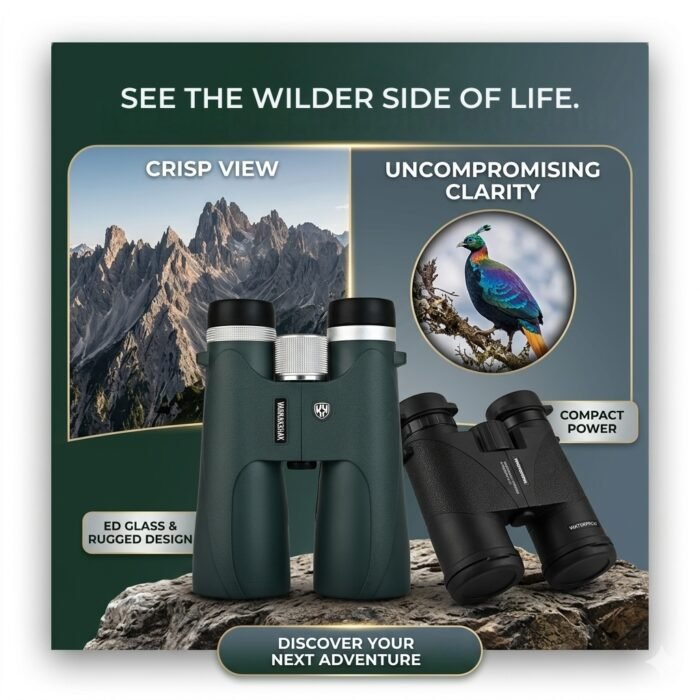
For people looking for practical optical equipment for outdoor and wildlife use, Vanrakshak offers binoculars designed around field requirements.
The range includes models with different magnification and objective lens configurations, allowing users to select equipment according to their preferred style of observation. For example, the Vanrakshak TEJAS 8×42 combines 8x magnification with a 42mm objective lens and FMC optics, making this configuration suitable for bird watching, wildlife observation, trekking, and nature exploration.
Vanrakshak focuses on practical outdoor use, with features designed to support clear viewing and comfortable handling in the field. This makes the range relevant for both nature enthusiasts and users who regularly spend time outdoors.
If you are comparing Binoculars for Bird Watching, checking the complete specifications of each model is important before making your final choice.
Where to Buy Binoculars for Bird Watching
Once you know the specifications you need, the next step is choosing a reliable seller. Buying from an established store can make it easier to check product specifications, warranty information, available models, and after-sales support.
You can explore binoculars and outdoor optical equipment at A&S Creations and purchase directly from the store. This gives customers an opportunity to compare suitable binocular models according to their bird watching, wildlife, travel, and outdoor requirements.
Whether you are buying your first pair or upgrading your existing equipment, focus on practical performance rather than choosing binoculars based only on magnification or price.
FAQs
1. What are the best binoculars for bird watching?
For general bird watching, 8×42 binoculars are a popular choice because they offer a useful balance of magnification, field of view, brightness, and portability. A 10x model can be considered when greater magnification is needed.
2. Are 8x binoculars good for bird watching?
Yes. 8x binoculars can be particularly useful for beginners and general bird watching because they usually provide a steady view and a practical field of view for tracking moving birds.
3. What does 8×42 mean in bird watching binoculars?
In an 8×42 binocular, 8x indicates the magnification, while 42 refers to the 42mm diameter of the objective lenses. This is a commonly used configuration for outdoor observation.
4. Are waterproof binoculars useful for bird watching?
Yes. Waterproof binoculars can be useful for outdoor bird watching because birding may involve exposure to rain, humidity, water bodies, and changing weather conditions.
5. Where can I buy binoculars for bird watching in India?
You can purchase binoculars for bird watching from reliable optical and outdoor equipment stores. A&S Creations also offers binoculars that customers can purchase directly for bird watching, wildlife observation, travel, and outdoor activities.
Final Thoughts
Bird watching becomes much more rewarding when you can observe details that are difficult to see with the naked eye. The right binoculars help you enjoy those moments while maintaining a comfortable and respectful distance from birds and wildlife.
When choosing Binoculars for Bird Watching, consider magnification, objective lens size, optical coatings, field of view, focusing, eye relief, weight, durability, and weather resistance. A balanced combination of these features is generally more useful than focusing on one specification alone.
For outdoor enthusiasts looking for practical equipment, Vanrakshak offers binocular options designed for wildlife observation, bird watching, travel, and nature exploration. You can also purchase your binoculars directly from A&S Creations and choose a model according to your specific viewing requirements.